What are mitochondria and why do they matter if you have ADHD or autism?
A social media post said neurodivergent overwhelm comes from the power plants in our cells. In autism and ADHD half of that holds up. The other half is still a hope.
A post drifted past me on social media a few weeks ago. It said the overwhelm so many of us feel comes down to differences in the tiny power plants inside our cells. So do the days we need afterwards to recover. There were no sources, but a lot of people clearly recognised themselves in it.
I wanted it to be true. I’m also the kind of person who can’t leave a claim like that alone. So I went and looked.
What I found is a story in two halves. The first half is better supported than I expected. The second half is where the science stops and the hoping starts. If you have ADHD or you’re autistic or both the gap between those halves matters. Because if your energy budget is a physical thing rather than a character flaw it changes how you plan a week.
The power plants in your cells
Every cell in your body runs on a molecule called ATP. Think of it as cash. Nothing happens in a cell without spending some. The ATP is made by mitochondria, hundreds or thousands of them per cell, and the easiest way to think of them is as power plants.
Your brain is the greediest customer on the grid. It’s about two percent of your body weight and burns around a fifth of your energy while you sit still. Brain cells are the hungriest cells you own. So a power plant that runs a little inefficiently matters more in your head than almost anywhere else.
That raises two questions. Do autistic and ADHD brains make or use energy differently? And if they do, is that why a busy supermarket can wipe out an afternoon? The first question has real answers. The second is where things get interesting.
Autism: the evidence is substantial
Let’s start with the condition where the research is furthest along.
In 2012 two researchers examined the data from every study they could find on autism and mitochondria. Their review found that around 5 percent of autistic children have a diagnosable mitochondrial disease. In the general population that figure is roughly 0.01 percent. One in twenty against one in ten thousand. A far larger group of autistic children showed abnormal blood markers without meeting the full bar for a diagnosis.
The same team updated the work in 2024, this time across 204 papers. Raised lactate, a leftover that builds up when cells can’t finish burning fuel, showed up in 17 percent of autistic children. Raised pyruvate, a related marker, in 41 percent. And the more abnormal the markers the more severe the autism tended to be.
One thing worth knowing as you read those numbers. The authors of both reviews run clinics that treat autistic children for exactly this. That doesn’t make them wrong, and their reviews are the field’s standard reference. It does make independent evidence worth having. Happily there is some.
The most direct evidence comes from brain tissue donated after death. A 2011 study measured the protein machinery that does the final step of making ATP in the brains of autistic children. Then it compared them with children without autism. In three regions the autistic children had less of it. The part at the back that handles movement and timing. The front that plans. The sides that process sound and language. In two of those regions there was no overlap at all between the groups, which is rare in this kind of work.
Now the twist, and it’s an important one if you’re an adult reading this. The same study looked at an older autistic group too, aged 14 to 39. Their levels were the same as everyone else’s. The researchers suggest the childhood shortfall may readjust to normal by adulthood. The adult group was small and the study measured amounts of protein rather than how hard it was working. But the one study that looked says the deficit may not last.
So what does that mean for you? If you’re autistic the odds that your cells make energy a bit differently are real and higher than for most people. Whether that’s still true at 45 is an open question. Nobody has a confident answer yet.
ADHD: an old idea the evidence is catching up with
In 2001 two researchers published a paper with a question for a title. Is ADHD an energy deficiency syndrome? Their reasoning went like this. The brain chemicals that run low in ADHD have a second job. They tell the brain’s support cells to release fuel to the neurons that need it. Low chemicals, slow fuel pump.
Five years later a group of the field’s leading researchers took it further. The most consistent lab finding in ADHD isn’t inattention. It’s inconsistency. Ask someone with ADHD to press a button when a light flashes and their reaction times swing about far more than other people’s. The 2006 paper argued this is best explained as an energy supply problem. Brain cells can fire at the right rate but only in bursts, because the fuel can’t keep up with sustained demand. Brilliant for twenty minutes then nothing. They even proposed that stimulant medication works partly by restoring the fuel supply.
Both of those papers were ideas rather than evidence. They couldn’t be tested properly in 2006. Here’s what has arrived since.
In 2016 a team rebuilt cells using mitochondria taken from the blood of ADHD patients. Those cells burned less fuel, had less activity in the machinery that makes ATP and showed more chemical wear and tear than cells carrying mitochondria from people without ADHD. One lab and one set of cell lines, but the first time anyone had directly measured ADHD power plants at work.
In 2020 a German team took skin cells from ADHD patients carrying a rare variant in a gene called PARK2. They grew them into dopamine-producing brain cells in a dish. Those cells struggled to make ATP and used oxygen differently from control cells, and some of those differences grew under stress. It’s a rare subgroup and the authors call it preliminary. It’s also the first time anyone has watched ADHD neurons struggle to make energy.
Then in 2023 a study examined the data from 14 studies covering both autism and ADHD. They were looking at how many copies of the mitochondrial instruction manual each cell carried. Cells make extra copies when the existing ones are struggling, so a higher count reads as a distress signal. In blood samples matched for age the count was significantly higher in ADHD. In autism it wasn’t. Which is a tidy reminder that these two conditions overlap without being the same thing.
And the exhaustion itself has been measured. A 2017 study of 243 adults with ADHD found that 62 percent met the criteria for clinical fatigue. On day-to-day functioning, mood and confidence they looked much like a group of adults with chronic fatigue syndrome. That study didn’t touch mitochondria at all. What it did was establish that being worn out is a mainstream clinical feature of adult ADHD rather than something we’ve all imagined.
So the ADHD picture is a twenty-year-old theory from serious people and early evidence from blood and cells and lab-grown neurons. Plus a fatigue rate that would alarm any doctor. Nobody has yet looked at ADHD brain tissue the way the 2011 team looked at autistic brain tissue. That study is waiting to be done.
But here’s the thing
Everything above is about cells. The post I saw was about overwhelm. The jump from one to the other is where the evidence runs out.
The closest the lab has come is a 2014 study that took immune cells from 25 autistic children and measured their reserve capacity. That’s how much extra output a power plant can produce when demand spikes. Headroom, in other words. Then the researchers stressed the cells with a chemical and measured again.
The autistic cells did something odd. At rest they ran hotter than the control cells, producing more energy. Then when the stress went up they wasted more of it as heat and lost their headroom faster and harder. Running hot with no headroom. Fine until suddenly not fine. If you’ve ever been coping perfectly well in a loud room and then abruptly not been that pattern will sound familiar.
I have to be straight with you about the caveats. These were immune cells not brain cells. Children not adults. A chemical in a dish not a supermarket on a Saturday. And the pattern came from 8 of the 25 children, about a third, not all of them. A follow-up using siblings as the comparison found the same subgroup pattern. It’s an analogy the data permit. It isn’t a demonstration.
Only one peer-reviewed paper puts burnout and mitochondria in the same argument, and it’s a proposal rather than a result. A 2022 theory paper starts with masking, the daily work of hiding autistic traits to fit in. It suggests masking is a form of chronic stress that wears down the cell’s power plants over years and is eventually felt as burnout. The authors say plainly that the biological mechanisms of burnout “remain largely unexplored by molecular researchers.” I’d rather quote that than dress it up.
So here’s what nobody has done. Nobody has measured brain energy during a shutdown. Nobody has tracked mitochondrial blood markers through a burnout and out the other side. Nobody has linked one person’s cell measurements to how long they take to recover from a bad day. And no trial has tested whether a treatment aimed at mitochondria reduces overwhelm. Not one of those four studies exists.
What does exist is a direction of travel. Autistic burnout was first defined in a 2020 study built with autistic adults. They described it as “having all of your internal resources exhausted beyond measure.” The same research programme released a preprint in August 2026 that hasn’t yet been peer reviewed. The first sentence of its summary uses a new name. Autistic Chronic Energy Depletion Syndrome. The people who defined burnout are now describing it as running out of energy.
The honest summary is this. The biology makes the experience plausible. Nobody has yet checked.
What I’d actually do with this
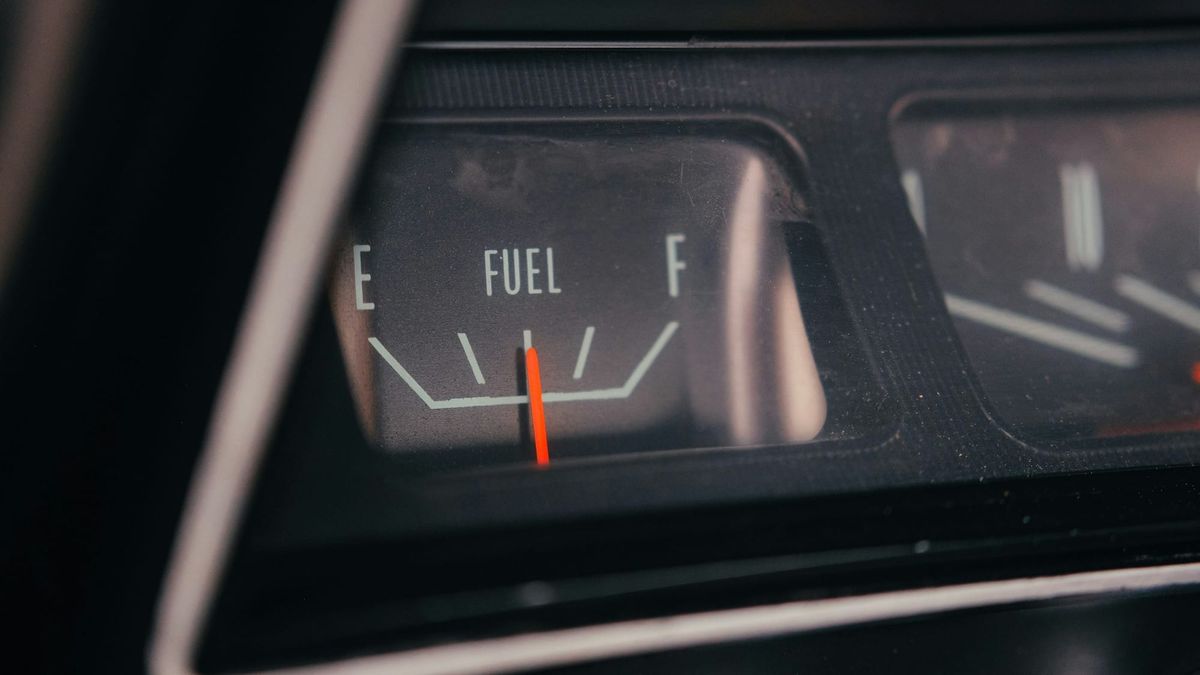
Treat your energy budget as a physical budget. Not a metaphor. If the headroom idea is even partly right you don’t get a warning light when the tank is low. You find out when it’s empty. So plan recovery time into a week the way you’d plan fuel stops into a long drive, before you need them rather than after.
Move your body, because exercise is the one lever with strong evidence for building more power plants. In muscle that’s about as settled as physiology gets. In the brain the direct evidence is from mice. Eight weeks of treadmill running increased the markers of new mitochondria being built across several brain regions. We can’t measure that in a living human brain yet. But it’s the only intervention here with a mechanism, a track record and no downside.
Carnitine is worth knowing about and worth being honest about. It’s the molecule that carries fat into mitochondria to be burned, it’s cheap and its safety record is clean. In autism two small trials gave it alongside risperidone and both came out positive. 68 children over ten weeks showed less irritability and hyperactivity. 50 children and teenagers over eight weeks improved on an overall behaviour score and on lethargy. In ADHD the picture is different. The one properly sized trial gave 112 children a related form called acetyl-L-carnitine for 16 weeks and found no overall effect. There was a hint of benefit in the inattentive type only and nobody has followed it up in nearly twenty years. Safe, cheap and unproven for ADHD is the fair description.
Skip the ketogenic rabbit hole for this purpose. The evidence that keto helps autism is almost entirely in mice. The one human study had 15 children and no comparison group. For ADHD there’s nothing at all.
On testing, standard blood tests can pick up mitochondrial trouble. Lactate, pyruvate, a carnitine profile and a muscle enzyme called creatine kinase, with the 2024 review setting out the approach. The people who stand to gain are autistic and had the red flags in childhood. Seizures. Losing skills they’d already gained. Gut problems. Late movement milestones. Those were the features that turned up more often in the one in twenty with full mitochondrial disease. For adults with ADHD there’s no testing pathway. I’d love to tell you there was.
The bottom line
In autism around one in twenty children has a diagnosable problem with the cell’s power plants and many more show the blood signs. The brain tissue evidence is the most direct we have, it’s in children, and the one look at older subjects says it may fade. In ADHD a twenty-year-old energy theory from mainstream researchers now has early backing from blood, cells and neurons grown in a dish. Add a measured 62 percent rate of clinical fatigue. The link from any of that to overwhelm and recovery is a published hypothesis that nobody has tested.
So budget your energy like fuel and plan the stops in advance. Exercise most days, because that’s the one way we know builds more power plants, in muscle for certain and in the brain if the mice are any guide. If you want to try carnitine it’s safe, but go in knowing the ADHD trial was negative overall. Leave keto alone for this. And if you’re autistic and had seizures, lost skills or had gut trouble as a child, ask your doctor about a mitochondrial blood screen. Nothing in this post is medical advice, and anyone considering supplements should run it past a doctor first.
Photo by Wesley Tingey on Unsplash.
Studies cited in this post
- Rossignol DA, Frye RE. Mitochondrial dysfunction in autism spectrum disorders: a systematic review and meta-analysis. Molecular Psychiatry 2012. https://doi.org/10.1038/mp.2010.136
- Frye RE et al. Biomarkers of mitochondrial dysfunction in autism spectrum disorder: a systematic review and meta-analysis. Neurobiology of Disease 2024. https://doi.org/10.1016/j.nbd.2024.106520
- Chauhan A et al. Brain region-specific deficit in mitochondrial electron transport chain complexes in children with autism. Journal of Neurochemistry 2011. https://doi.org/10.1111/j.1471-4159.2011.07189.x
- Todd RD, Botteron KN. Is attention-deficit/hyperactivity disorder an energy deficiency syndrome? Biological Psychiatry 2001. https://doi.org/10.1016/s0006-3223(01)01173-8
- Russell VA et al. Response variability in Attention-Deficit/Hyperactivity Disorder: a neuronal and glial energetics hypothesis. Behavioral and Brain Functions 2006. https://doi.org/10.1186/1744-9081-2-30
- Verma P et al. Attention deficit-hyperactivity disorder suffers from mitochondrial dysfunction. BBA Clinical 2016. https://pmc.ncbi.nlm.nih.gov/articles/PMC5121149/
- Palladino VS et al. Energy metabolism disturbances in cell models of PARK2 CNV carriers with ADHD. Journal of Clinical Medicine 2020. https://doi.org/10.3390/jcm9124092
- Al-Kafaji G et al. Mitochondrial DNA copy number in autism spectrum disorder and attention deficit hyperactivity disorder: a systematic review and meta-analysis. Frontiers in Psychiatry 2023. https://doi.org/10.3389/fpsyt.2023.1196035
- Rogers DC et al. Fatigue in an adult attention deficit hyperactivity disorder population: a trans-diagnostic approach. British Journal of Clinical Psychology 2017. https://doi.org/10.1111/bjc.12119
- Rose S et al. Oxidative stress induces mitochondrial dysfunction in a subset of autism lymphoblastoid cell lines in a well-matched case control cohort. PLoS ONE 2014. https://doi.org/10.1371/journal.pone.0085436
- Rose S et al. Mitochondrial and redox abnormalities in autism lymphoblastoid cells: a sibling control study. FASEB Journal 2017. https://doi.org/10.1096/fj.201601004R
- Mahony C, O'Ryan C. A molecular framework for autistic experiences: mitochondrial allostatic load as a mediator between autism and psychopathology. Frontiers in Psychiatry 2022. https://doi.org/10.3389/fpsyt.2022.985713
- Raymaker DM et al. “Having all of your internal resources exhausted beyond measure and being left with no clean-up crew”: defining autistic burnout. Autism in Adulthood 2020. https://doi.org/10.1089/aut.2019.0079
- Nicolaidis C et al. Psychometric properties of the AASPIRE Autistic Burnout Measure, Revised. medRxiv preprint, August 2026. Not yet peer reviewed. https://doi.org/10.64898/2026.08.19.26360826
- Steiner JL et al. Exercise training increases mitochondrial biogenesis in the brain. Journal of Applied Physiology 2011. https://doi.org/10.1152/japplphysiol.00343.2011
- Nasiri M et al. L-carnitine adjunct to risperidone for treatment of autism spectrum disorder-associated behaviors: a randomized, double-blind clinical trial. International Clinical Psychopharmacology 2024. https://doi.org/10.1097/YIC.0000000000000496
- Shakibaei F, Jelvani D. Effect of adding L-carnitine to risperidone on behavioral, cognitive, social, and physical symptoms in children and adolescents with autism. Clinical Neuropharmacology 2023. https://doi.org/10.1097/WNF.0000000000000544
- Arnold LE et al. Acetyl-L-carnitine (ALC) in attention-deficit/hyperactivity disorder: a multi-site, placebo-controlled pilot trial. Journal of Child and Adolescent Psychopharmacology 2007. https://doi.org/10.1089/cap.2007.018
- Lee RWY et al. A modified ketogenic gluten-free diet with MCT improves behavior in children with autism spectrum disorder. Physiology and Behavior 2018. https://doi.org/10.1016/j.physbeh.2018.02.006