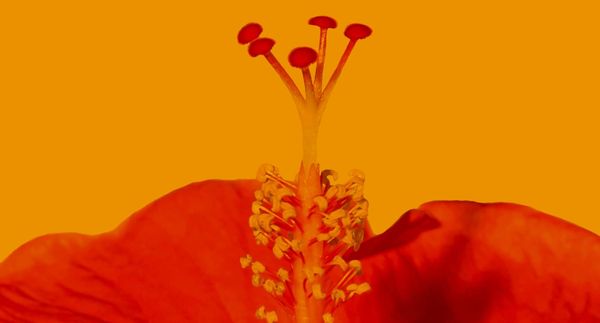
Kali's Tongue and the Shoeflower: The Strange Folklore of Hibiscus
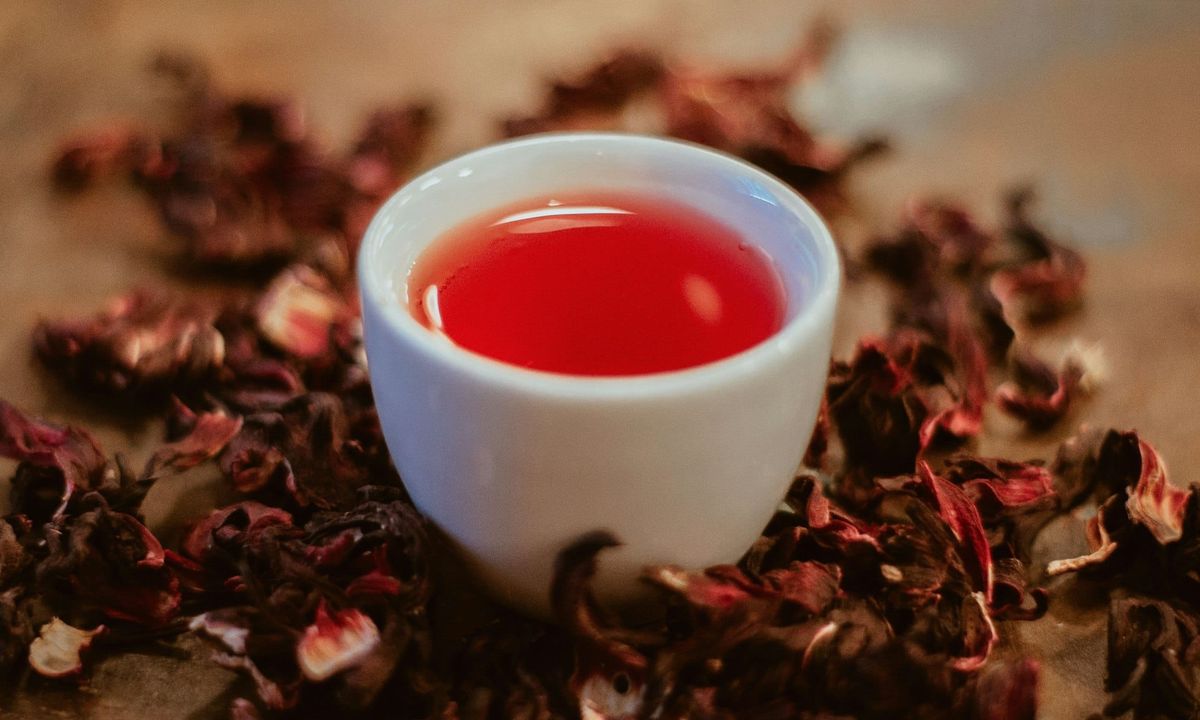
A warning before we start. This post contains no blood pressure data. While I was researching last week's piece on hibiscus tea and the brain I kept tripping over something else entirely: the stories. Goddesses, emperors, public shamings and an awful lot of polished shoes.
So this one is a small departure. Less lab coat, more campfire. I find this historical folklore stuff fascinating and I suspect a few of you will too. And because this is still me, every story here has been fact-checked, because it turns out a surprising number of the hibiscus tales on the internet are made up. I'll tell you which ones at the end.
One flower, four opposite meanings
Here is the strange botanical fact underneath all of it. A hibiscus bloom lasts a single day. Every culture that grew the plant noticed, and each one drew a completely different conclusion.
Japan saw transience. Basho wrote a haiku in 1684 about his horse eating a roadside hibiscus: a flower that gets one day and did not even get that. A single hibiscus bud is still placed in the tearoom during the Japanese tea ceremony as an emblem of impermanence.
Korea looked at the same flower and saw eternity. Its national flower is the mugunghwa, a hibiscus whose name means "eternal blossom", because the bush replaces every fallen flower for a hundred days straight. During the colonial period it became a quiet symbol of resistance. Schools were pushed to plant cherry trees instead and rumours spread that touching the flower caused eye disease. One educator, Namgung Eok, secretly distributed seedlings across the country until his arrest in 1933, after which around 80,000 of his young plants were burned.
Hawaiians read the hau hibiscus as a daily lesson in mortality: yellow at dawn, orange by afternoon, fallen and dark red by nightfall. And China's colour-changing hibiscus, white in the morning and crimson by evening, was nicknamed the thrice-drunk flower and managed to stand for fickle fortune and stubborn endurance at the same time, since it blooms on into the frost.
Same flower. Four civilisations. Four verdicts on what a short life means.
Goddesses, emperors and graves
In Bengal the red hibiscus belongs to the goddess Kali. Garlands of it are draped over her images at Kali Puja and folk tradition says the flower resembles her lolling red tongue. The association is genuinely old. A famous Sanskrit sun mantra describes the sun itself as shining like the hibiscus flower.
China gave it an imperial flourish. In the tenth century the emperor Meng Chang had hibiscus planted along the walls of Chengdu until the city was said to look like brocade, and Chengdu has been nicknamed the Hibiscus City ever since. The most treasured hibiscus image in Asian art, a pair of blooms painted in 1197, now hangs in the Tokyo National Museum as a National Treasure.
Not every association is sunny. In Okinawa the red hibiscus is planted on graves as the flower of the other world, offered lovingly to ancestors. In old Siam a woman convicted of adultery was paraded wearing red hibiscus at both ears, which made the flower inauspicious in Thailand for generations. And in Vietnam the hedge hibiscus is kept off ancestral altars, partly because its name sounds uncomfortably like the word for lust.
The drink that crossed an ocean
The tea has its own folklore trail. In Egypt karkade is the toast drunk at weddings to bless the couple with joy, and it fills the tables at Ramadan. A Sudanese village legend says the crimson drink sprang from the tears of a bride whose groom never came home from war.
From its West African homeland the plant travelled everywhere. In Senegal bissap is practically the national drink. In northern Nigeria zobo defines hospitality. And it crossed the Atlantic in the era of the slave trade, where food historians have traced it into the red drink tradition of African-American celebrations: the ancestor of the red drinks poured at Juneteenth today.
My favourite piece of drink history is the most practical. In Jamaica and Trinidad sorrel is strictly a Christmas drink, and the reason is botany rather than ritual. The old varieties only produced their harvest in November and December. The tradition is simply the growing season wearing a party hat.
The shoeflower
Now for the hard fact I can't stop telling people. Across China, India, Malaysia, Indonesia, the Philippines and Jamaica, people used crushed hibiscus petals to polish shoes. The sap gives a respectable black shine. That is why the ornamental hibiscus is called the shoeflower in several languages, and why its Indonesian name, kembang sepatu, literally means shoe flower.
One plant. Worshipped on one continent, buffing brogues on another.
The stories that don't survive checking
Because this is still an evidence blog at heart, here are the popular hibiscus tales that fell apart when I went looking.
There is no solid evidence the pharaohs drank karkade, romantic as that sounds. The story that ancient Egyptian women were forbidden the tea because it stirred up lust cannot be traced back further than modern books. The Aztecs never drank agua de jamaica, because hibiscus only reached Mexico in the colonial era. The rose of Sharon in the Bible was almost certainly not a hibiscus at all. And the famous Hawaiian rule that a flower behind the left ear means taken while the right ear means available appears to be twentieth-century visitor lore layered onto a much older tradition of simply wearing flowers.
None of this makes the real stories less rich. If anything the true ones are stranger.
How I drink mine (a confession)
Since we're doing folklore, here is a piece of living tradition from my own kitchen, offered in the spirit of full disclosure.
I brew mine strong. Properly strong, double the usual dose, the colour of a stained-glass window. Then I add a generous pinch of cayenne pepper and, brace yourself, a dollop of Marmite. Sour, hot and savoury all at once. The cayenne brings warmth, the Marmite brings depth, and I accept that I may be the only person on Earth drinking it this way. My ancestors have offered no recorded opinion.
If you try it, or if you have a strange brew of your own, tell me. Future folklore has to start somewhere.
The bottom line
Brew a pot of hibiscus this week and you're drinking something people have worshipped with, celebrated with, mourned with and polished shoes with for over a thousand years. If you want the health science, including what it may do for your blood pressure and possibly your brain, that story is here, along with a way to test the brain claims on yourself. Whatever you add to your cup, you're in ancient company. Except possibly the Marmite.